Time to insert a little bit of PR into my personal blog. Today it is my pleasure to introduce the new official Seed Southern Africa Blog!
https://southernafricaseed.wordpress.com/
Don't worry, I'm not abandoning this blog. You can still come back here for (occasional) personal reflections and stories as always. The Seed Blog however is a wonderful platform to learn more about the Seed Program as it unfolds in Southern Africa for the first time. As we get going over the next couple of months the participants will begin posting their own stories and reflections. Seed is not only about Agriculture, it is about learning, growing, reflecting, and sharing. This blog will be THE place to keep in touch with the fantastic changes happening in the region. In 4 short weeks the program will begin with MCC general orientation in Colombia. From there we'll have an extensive month long regional orientation in South Africa and Zimbabwe. We have 8 participants: 1 from Zambia, 1 from Mozambique, 1 from Swaziland, 2 from Lesotho, 1 from South Africa, and 2 from the U.S. Please keep them in your prayers as they apply for visas and make final travel preparations.
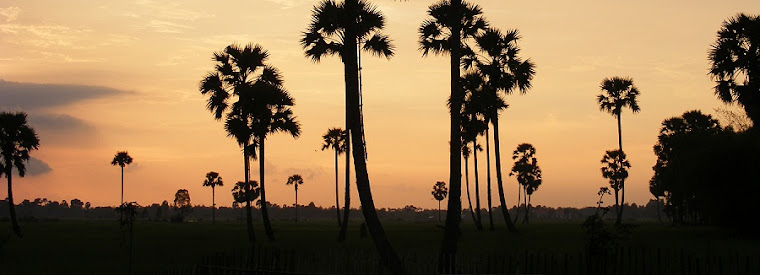
"There are far, far better things ahead than any we leave behind." ~C.S. Lewis
Friday, July 22, 2016

Tuesday, May 24, 2016
Why I am excited about Seed
We’ve been busy conducting interviews for the Southern
Africa Seed program and are now done the selection process. Eight young
people from Southern Africa and North America are getting ready to join MCC and
serve with our partner organizations for two years. During the interviews, one
young woman asked us a question “what makes you (the facilitators) excited
about Seed?” It is a question I never get tired of answering.
The Seed program started in Colombia several years ago as two year
volunteer program for young adults with an emphasis on Serving, Learning,
Reflecting, and Peace/Advocacy. Now there are 4 active Seed programs in
Colombia, Bolivia, DRC, and Southern Africa. Here in Southern Africa, food
security is a key priority for many of our partners so the participants will be
placed with organizations involved in conservation agriculture activities.
So what makes me excited about Seed?
Seed is about getting young people involved in something
bigger than themselves. It is a chance to learn about a new culture, to travel to new
countries, to meet new people, and to learn a new language. Seed is an
opportunity to serve and give of yourself, and in doing so you will most
certainly receive more than you can imagine.
Seed is about getting young people involved in agriculture.
Agriculture is life. It carries a responsibility we too often neglect; to be good
stewards of the land God has given us. Agricultural practices can damage and
destroy the land or they can redeem and restore the land. The tools for healthy
and sustainable living have been given to us if we open our eyes to learn from
the examples of nature around us.
Seed is about connection. Taking a group of young people
with a common interest in agriculture and development and putting them together
to dig down to the root causes of food insecurity and injustice in their
communities. Young people motivating and challenging each other to be critical
thinkers, problem solvers, and change agents.
Seed is about young people having a say in the development
of their communities. If young people are involved in agriculture, and if
agriculture is life, then young people can shape the development of their
communities in a move towards sustainability, food sovereignty, and shalom.
What is shalom? What are the root causes of food insecurity
and conflict in our communities? What is the link between agriculture, food
sovereignty, justice, and peace? How do those four areas work together to
bring about communities where people know shalom, where people are in right
relationship with themselves, with their neighbours, with God, and with
creation?
The Seed program is a seed- a seed of transformation planted
in the participants, in the communities where they work and live, in our
partners, and in MCC herself. It is a goal that at times seems lofty beyond our
means, but that is the power of relationship and working together. To see young
people motivated and inspired to lead their communities towards food
sovereignty and shalom. To see farmers, communities, and partners with the
capacity to do the same. To see MCC set priorities where the needs are most
strongly felt and to use to the greatest advantage the strengths, abilities,
and passions of young leaders from Southern Africa. That is where we are headed
over the next two years, and that is what makes me incredibly excited.
 |
| Part of our job in these early months is going around and visiting MCC's partners in Southern Africa who are doing Conservation Agriculture. The Brethren in Christ Church in Zambia has been training farmers in rural communities how to apply CA in their fields. |
 | ||
Guba isn't a partner of MCC's but the organization in Swaziland is doing some fantastic stuff when it comes to permaculture, community outreach, and addressing the issue of small land owner's access to market for cash crops. This is a section of a woman's kitchen garden- notice the variety of crops, the mulch, the small composting pile in the centre. And did I mention she is doing all of this on a mountain side? Wow!
|

 | ||
On the way to visit one of MCC's partners in Zimbabwe (Binga district) we stopped by the road to see the hot springs. Who knew?
|

Sunday, April 17, 2016
I am a feminist
I had started writing this post over a month ago, meaning to
post it on International Women’s Day. However, I kept re-writing parts and
delaying, worrying it sounded too angry or reactive. After being harassed on
the way to church today by a man who tried to convince me that I wanted to have
sex with him (once you are black you never go back, and have I ever tried dark
chocolate??) angry is exactly how I felt. It is time to stop re-wording things
and post it as it is. If a little emotion peeps through, so be it.
What does it mean for me to be a woman and a feminist in Southern
Africa? I present to you my own thoughts, stories, and experiences of what it
means to me, respectfully acknowledging that other women, and men, might come
at this from a very different set of experiences or perspectives.
The term “feminist” has some extreme references that are not
necessary reflected in this blog, however, I choose this word because nothing
else quite fits. I choose it in order that I might begin exploring what
feminism means to me at this time.
There’s more to the story I told last month, the one about
the taxi driver wanting to marry me for 20 cows. First of all, we forgot to pay
him for the ride and he forgot to ask, which is kind of hilarious. But that’s
not the part I want to tell. It is this; the next day we were with some
colleagues of Keke’s and she was telling them the funny story from the day
before. Her male friend exclaimed, “Only 20 cows!? Next time you take a taxi
bring me along and we’ll get a better deal.” Later that day he started joking
that I was his girlfriend, and that didn’t stop even when someone pointed out
that his fiancé might not be too pleased.
Here is my dilemma. This type of joking conversation seems
very normal here. Even not-so-joking declarations of love and requests for my
hand in marriage are every-day occurrences in my life. It gets so that I can’t
develop a professional relationship with young men because before the day is
out they are asking to marry me.
So, just because it is normal, or just because they are “joking”, does
that make it right? I can think of plenty of examples from my own Canadian
culture of norms that are oppressive, discriminatory, or demeaning towards
women.
Just because it is normal doesn’t mean it is right.
I had a whole speech ready to hand it to this guy, ready to
challenge him as a young leader in his country to set an example of respect
towards women, challenge him to re-think the implications of such social norms.
What does it say about his views towards women when his whole demeanor
suggested I should be happy to “pretend” date him because he thought it was a
good idea, not because he asked me. As if I couldn’t do better than an arrogant
prick like him! I had the opportunity to say all these things, but I choked. I felt too alone, too aware
I’d just be brushed off as an uptight girl who can’t take a joke, and what
business did I have commenting on Lesotho culture anyway?
What does it mean for me to be a feminist in Southern
Africa? This is a question I often ask myself, and there is no easy answer. It
is easy to be a feminist in New Brunswick. Other people can write the provoking
blog posts and I can nod in agreement and go on with life. But now it is my
turn to write.
I am a feminist.
Sometimes being a feminist means refusing to let random
teenage guys take my picture when I am at the beach in Mozambique. I ask them
if it is respectful to try and take someone’s picture without even greeting
them first, in a culture where greeting is very important. They look embarrassed
and leave me alone after that.
Sometimes being a feminist means stiffening my shoulders and
focusing my eyes in the distance as drunken men hiss and call after me on the
street.
I am a strong woman.
Sometimes being new to a country I would do anything just to
fit in. I find myself carrying my male colleague’s bags that he handed to me as
we walk out of the store together. At first I feel happy that I belong, happy
that he is treating me, a foreigner, like any other woman. Wait a second. What
am I doing?? I don’t want to carry his bags for him! I am too embarrassed to
give them back. Am I a strong woman?
Sometimes people ask me if I think it is better to be a man
or a woman. Sometimes people laugh at my idealism when I make a point about
woman’s rights or equal opportunity. But at least if they join in the
discussion the first step has been won.
Sometimes the divide in the debate is generational, not
gender based. Are teenage girls who wear short skirts somehow to blame when
they experience sexual violence? The room is split and it is not men versus
women. There is hope.
When I moved to Machanga in Mozambique last year I had the
chance to pick out the motorcycle I wanted. In a place where few women know how
to drive, having wheels gave me freedom and independence. I knew exactly what I
wanted: a cute little scooter with the tank under the seat and electric
starter. Totally impractical for the rural roads I was driving, but very
important for me for three reasons. The tank under the seat instead of between
the knees meant I could wear a skirt while riding. The electric starter meant
no kick-starting, which requires sturdy shoes (not heels) and more weight than
I’ve got. The small scooter size meant I could easily push it up a wooden plank
and into my house every night for safekeeping. I am perfectly capable of riding
a big Honda XL 125CC bike much more suited to rural sandy roads, but I didn’t
just want freedom to get around. I wanted freedom to get around while rocking heels
and a pencil skirt. People are always well dressed in Mozambique and it is
important to look nice and wear smart shoes. Quite seriously the second thing I
bought for my new apartment was a clothes iron (the first being a toaster). My scooter
let me dress how I want and still have the freedom to get around. The
definition of independence shouldn’t mean to be like a man.
I am an independent woman.
Here, when you meet a new person, instead of asking what you
do, people ask if you are married. An elderly man, when he heard I was single
at 26 said to me, “Don’t worry, God will provide someone for you.” I asked him
if God is not providing for me now when I am single.
I am a strong woman.
I see other women who are strong, courageous,
loving, independent, strong-willed, compassionate, caring, genuine, and
generous, and I am inspired.
I am a strong woman. Sometimes I feel it, and sometimes I
don’t. Sometime I laugh, sometimes I cry. Sometimes I feel intimidated and am
angry at myself for it, because I am strong, right? Sometimes I am vulnerable. Sometimes
I am victorious.
I am all these things. I am a woman. I live with hope, not
bitterness. I live in this world
but I try to live so that tomorrow, even in the smallest of ways, it might be a
better one.
Tuesday, March 29, 2016
A Room with a View
I was recently doing one of those map things you find on
facebook where you fill in all of the countries you have visited and it highlights them on the globe. I still have
a lot of places to go, but what caught my attention is that I have lived in 5 different
countries on 4 continents! 5 might not sound like many, but for a 26 year old
who, until she was 21, never imagined leaving the Maritimes, it is a lot. (If
you are trying to do the math and it is not adding up, don’t forget I spent a
term in Finland during university.)
I often get the rather annoying question “what place do you
like more: A or B?” It is annoying because there is no way to give a
satisfactory answer. If I make a definite choice, people think I am lying to please
them, if I say there are things I like about both, it is a cop-out.
 |
| It didn't take me long to find a home for my bird poster on the walls of my new place. |
I’ve been in Zimbabwe a few weeks now, and soon people will
be asking me how it compares. Every place has its ups and downs to be sure, but
instead of comparing I’m going to give you a short intro to Zim by sharing some
of the things I am thankful for about my new place. The little things that, bit
by bit, are starting to make it feel like home.
 First of all, I love my apartment. It is one bedroom, but
the rooms are HUGE. The 10-foot ceilings and door handles at shoulder height
add to the effect. I’m on the 5th floor; a room with a great view. Added
bonus, the lift (installed in ’59) actually works. I love random decorative pillars
in the bedroom where I hang my hammock. I love the big windows. I love the
view.
First of all, I love my apartment. It is one bedroom, but
the rooms are HUGE. The 10-foot ceilings and door handles at shoulder height
add to the effect. I’m on the 5th floor; a room with a great view. Added
bonus, the lift (installed in ’59) actually works. I love random decorative pillars
in the bedroom where I hang my hammock. I love the big windows. I love the
view. |
| One section of the wardrobe devoted to my tailor-made dresses I've amassed over the years- most from Mozambique. |
KD made with real butter and milk feels like home. The KD is actually from home, but the butter and uht milk, and pretty much everything else I could want are available in one of many supermarkets walking distance from my place.

The MCC office is also just 10 mins walk from my house. The
city is impossible to get lost in. It is a grid and every avenue that runs
east-west is numbered sequentially starting from the north to the south end.
The streets are wide enough for an ox-cart team to make a 180-degree turn; even
though Bulawayo is the second biggest city in the country, it doesn’t feel too
crowded or congested.

 |
| Playing around with watercolour last Sunday… a mostly finished painting if Brier Island, Nova Scotia. |
Keke lives two floors below me and we go exploring the city together whenever we are free. We are each other’s mirror at the market and each other’s compass as we try to remember where that neat little Indian grocers was.
I love that there is a washing machine in Keke’s place and I
don’t have to wash anything by hand. After three years. Forget sliced bread,
washing machines are the best invention ever.
I love that Victoria Falls is less than 6 hours away by bus. Need I say more?

 |
| Impressive right? Or would be if you could actually see the falls. We got soaked with the spray. |
 |
| When I posted these pictures on Facebook someone pointed out that it looks a lot better without the hotels and casinos. Niagara is impressive, don't get me wrong, but this is something else. |
It took me a few weeks to find the right one, but I have found my soul-mate. One-person tea pots are hard to come by apparently. I've heard it gets cold in Bulawayo come May so I've gotten a head start on a cozy for her. It wasn't until I had my first proper pot of tea that I finally started to feel at home.

Wednesday, March 2, 2016
Impressions of Lesotho
My job is in full swing now. My co-worker Keke and I are
busy recruiting for MCC’s Seed exchange program in Southern Africa and finding
placements for the participants with our various agriculture/food-security
related partners. In order to do this, we have the great privilege of traveling
and visiting these partners in person.
 |
| The Tete countryside is beautiful in the rainy season. |
 |
| At Thole dam in Tete |
Our first stop after some orientation in Johannesburg was
the sand-dam project in Tete, Mozambique. It was great connect again with old
friends and colleagues. After showing Keke around my old stomping grounds, I
had the great pleasure to accompany her to her home country of Lesotho. The
official purpose of our visit was to see the MCC partner, but more meaningful
to me was getting to see Keke in her home country and get to know her family
and friends. Even before we got to her hometown, it was clear Keke was in her
element. Not 30 minutes after stepping foot in the country she was bargaining
my bride price with our taxi driver. She set it at 20 cows, which the driver
seemed to think was a bit steep. Since I don’t speak Sesotho, I was blissfully
unaware of the negotiations going on beside me.
 |
| View of the farm and peach orchard at Paballong. They are currently setting up a drip irrigation system to help conserve water during times of shortage. |
 |
| Sporting Keke's father's Basotho hat, holding a bucket of peaches. They peaches are small this year due to drought, the size of an apricot, but delicious nevertheless. |
 |
| Fresh bread! |

 |
| Farmer Kelebone showing me his maize/bean plot. Notice the great mulch and excellent example of intercropping. We are standing on the edge so it is hard to see, but the beans are covering the ground between rows of maize. |
 |
| An experiment at Growing Nations farm. This field was divided in two: the half pictured below they let animals to graze- there is no soil cover and some nasty weeds are taking hold. On the half above, there was no grazing. There is lots of mulching, and fewer weeds. Wheat was planted in lines using a ripper on the same day for both fields. but it hasn't rained since. Can you see which one has germinated? |

In other news, I have moved to Zimbabwe, have received my work permit, and finally have my own apartment in Bulawayo!
Saturday, February 20, 2016
Moving Boxes
I’ve been at this new job around
a month now. I’m still without a home, living out of a suitcase and jumping
from place to place- South Africa, meetings in Mozambique, partner visits in Leshotho,
Seed meetings in Joburg, an agriculture conference in Harare… But this week I will finally move to Zimbabwe. I am feeling a
bit anxious about moving to Bulawayo. It doesn’t
matter how many times I move, starting from scratch in a new home and new
country is a daunting prospect.
It doesn’t matter where in the
world you are, people (including me) have a tendency to put others in a box they understand until
they get to know and understand who you are. When that box is “white
missionary” you’ve got some work to do. There is such a complicated history
behind those two words. How do you begin to build your own identity? To be
accepted and known for who you are as a person? I do my best to break people’s
expectations, to varying success. I don’t wear “missionary skirts” and I keep my
many heels and sparkly shoes clean and washed. But does any distinction I feel
in my mind make a difference at all in the face of the realities of Southern
Africa?
I talk with people from the city
and they make some comment how I must be suffering because there is no AC in
the room. They don’t know I’ve spent a three years living in rural places, no
electricity, no fridge, no running water, hand-washing my laundry… Do I set the record straight every
time? Or do I just suck it up- is living with those assumptions the price of
the history I carry on the surface of my skin? The price of a life of
privilege.
I’m moving to Bulawayo together with my female colleague who is from Lesotho. Despite my outward appearance I am terrified of the idea of moving again. My colleague is fun and outgoing and in 3 days she’ll probably have made 10 friends who are all cooler than me! In three days I’ll probably be alone in my apartment with a cup of tea, wishing I at least had my cat to keep my company.
This song by Audrey Assad reads
like a poem, a prayer, and a heartfelt cry.
From the
love of my own comfort
From the fear of having nothing
From a life of wordly passion
Deliver me o God
From a
need to be understood
From a need to be accepted
From the fear of being lonely
Deliver me o God
From the
fear of serving others
From the fear of death or trial
From the fear of humility
Deliver me o God
And I
shall not want
No I shall not want
When I taste your goodness
I shall not want
When I taste your goodness
I shall not want.
Thursday, February 4, 2016
Ode to a Mango
Ten Different Ways to Eat a Mango
I’m back in the blogging world once more dear friends, this
time on the way to Zimbabwe, though I’ve only made it as far as South Africa at
this time. Since I’m no longer in Machanga I’ve had to change the title of my
blog once again. I thought I'd give "migration of the chickadee" a try for now… at least it is not geographically tied and sums up my current mobile state.
As of January 21st I have officially started my job as
co-facilitator for MCC’s Southern Africa Seed program, a 2-year volunteer exchange
program for young adults in the Southern Africa region, revolving around the
theme of food sovereignty and conservation agriculture. But I’ll write more
about that another day. It being a new job there are still too many unsolved
details at this point (such as when I’ll actually move to Bulawayo and where I
will be living once I get there), that I might as well wait a couple more weeks
to be able to paint a fuller picture of my new life.
So today I’ll stick to a safer subject matter, something I
DO know about. Mangoes. I love mangoes. Fresh of a tree in your backyard. Juice
up to your elbows. Like nothing you have every eaten before.
Often during my travels people ask what the climate in
Canada is like. I oblige them with terrifying stories of lakes frozen solid,
snow up to the eyeballs, cold that beats the coldest deep-freeze you’ve ever
stuck your hand inside. Then I tell them it is so cold in winter that we can’t
grow mango trees. They stare at me in disbelief. No mango trees? Nope. And no
papaya trees, guava trees, coconut, sugar cane, avocado, banana, jackfruit,
custard apple, passion fruit…
When asked what I like most about living in Cambodia or
Mozambique, mangos are always up there at the top. It is a fruit that must be
experienced in its natural habitat. Much as a mackintosh apple picked from the
orchard on a crisp New Brunswick fall day, for the proper mango eating
experience you must be sitting beneath a coconut palm, the mango still warm
from sun it was basking in when you pulled it from the tree not moments before.
If Solomon lived in the tropics, the songs he wrote would have had a lot
more mangos and a lot fewer goats.
1. Eat them green (just before they are ripe, a hint of yellow
in the flesh, a little crunchy and a little sour but amazingly delicious) with
salt and chili pepper.


3. Peel the very green ones and cook them in a pot until they
resemble applesauce. Add some maize flour and sugar and make a porridge for
breakfast.

5. Eat them as a salad over grilled fish.


7. Eat them in a fruit salad or a smoothie or baked oatmeal.

8. Eat them ripe off the tree cut in wedges.

9. Eat them scored in squares and turned inside out (my
favourite).

10. Or just dig in with your teeth and spit out the peel.

Thursday, October 22, 2015
Comings and Goings
There has been lots going on over the past few months; many
comings and goings. To save time I thought I’d sit down and just write briefly about them all at once, with lots of pictures.
In July I WENT on
vacation.
I don’t go on vacation often; there aren’t many places to go
when you are a single young lady with no travel buddy. True, the Peace Corps
Volunteers always find ways to travel around, but their stories generally start
with “one day I was hitch-hiking…” However, in the first week of July I had my
chance. A fellow Canadian MCC worker was driving down south through Mozambique
with her Mozambican colleague, and I met them on the highway near Machanga. Getting
to the highway was an adventure in itself. I had to bike 40 mins to town with
all my bags, leave my bike at my friend’s house, walk 30 mins to the river,
cross in a tiny dug-out canoe, walk again to the town on the other side, wait
an hour in the open bed of a pick-up truck “bus” for it to leave, and suffer
the hour long bumpy ride to the main highway squeezed between two strangers.
But I met my friends no problem and had a lovely couple days on the beach.
 |
| On one of mozambique's beautiful southern beaches in Inhambane province. It was still winter, hence the sweater, but we went for a swim nonetheless! |
 |
| The crossing to Mambone as I leave Machanga. Imagine this same boat with 5-6 passengers... thankfully the river is shallow an it is possible to walk most of the way in case the boat capsizes. |
Grace CAME to visit
me!
After the beach, my friend and I bused even further south,
crossed into South Africa, and picked up my little sister from OR Tambo
International Airport in Johannesburg. She traveled all the way to South Africa
on her own to come visit me! Braver than I was at 16. We toured around Kruger
National Park for a couple days. She couldn’t come all the way here and not see
the animals! Also, it was a good excuse for me to get in some excellent
birding.
 |
| Saddle-billed storks. Aren't those the craziest looking birds? |
 |
| Southern Yellow-billed hornbill. Credit for the bird pictures goes to Grace Standen. |
 |
| Go Pirates, Go! Grace, my friend Natasha and I were invited to a soccer game by a South African woman we met in a taxi. The three of us were the only white people in the ENTIRE stadium, but the atmosphere was incredible. |
Grace and I CAME to
Machanga
Grace and I then came
back to Machanga together. Having people visit is so special. First of all,
it gets lonely here. You can tell people all you want about Canada, about your
family at home, but they feel so far away. With Grace I laughed more in a day
than I do in two weeks by myself. Having a visitor also lets me see things
through new eyes; Mozambican culture, my work, language, food, goats. It is refreshing
and encouraging. And finally, there is now
someone at home who has a better idea of Mozambique, what my life is like here,
and the work MCC does.
 |
| Grace and I hanging out on the beach in Beira, Mozambique. |
 |
| Grace at my home in Machanga learning how to grate coconut and killing it. |
 |
| We spent a lot of time during her week or so in Machanga going around visiting my students. Here she is with Isabel Armando in her vegetable garden. It was fun to show off my little sister to all my friends here. Also funny that many couldn't tell who was older because Grace is much taller than me. |
Grace WENT home and I
WENT to the USA
Sadly, Grace went at
the end of July, and on the same day I also went to the States to MCC US’s headquarters in Akron, PA. I attended
MCC’s leadership seminar. Why was I sent to attend an MCC leadership seminar,
you ask? Well, let me tell you. I’ve landed a new position with MCC starting in
January 2016. I will be co-facilitator of MCC’s Seed Program in Southern
Africa. MCC has a number of young adult exchange programs, and if you haven’t
heard of Seed yet, you will hopefully hear more of it in the future. It started
in Colombia several years ago, then Bolivia, and next year there are two new
programs starting; one in the DRC and one in Southern Africa. Basically, it
sprung from the idea that one year exchanges are not long enough, and there
needs to be purposeful learning and reflection for the experience to be
meaningful to the individual, and meaningful to MCC’s partners and program as a
whole. In January I will go to
Zimbabwe where I will co-facilitate the program in Southern Africa. The
participants will come from all 6 countries where MCC works in Southern Africa
(Mozambique, Zimbabwe, Zambia, Swaziland, Lesotho, and South Africa) and one or
two participants from North America. They will be working with MCC partners for
two years in those same 6 countries (though not the country where they are
originally from). All of the work will be focused existing conservation
agriculture projects. They will also participate in extensive orientation,
learning, and reflection sessions. This program combines four things I love
most: learning, leadership development, agriculture, and MCC!
Also, I WENT to
Colombia
As a part of my preparation for this new position, I and the
other new facilitators went to Colombia to visit the existing program there.
How neat is that? We were all slightly reassured when we realized that none of
us really knew what we’d gotten into. Despite how over-whelming and intense the
job promises to be, being at once program facilitator, mentor, administrator,
friend, it also promises to be a time of learning, stretching, and hopd for
MCC, me, and the participants.
 |
| Every meal in Colombia is accompanied with a glass (or in this case plastic pitcher) of fresh homemade juice. So many delicious fruits I'd never even heard of before! |
 |
| Not only did we learn about the Seed program, but we got to experience a taste of MCC's work with partners in Colombia as well. Sembrando Paz works with rural communities wanting to rebuild their lives and culture after years of war and violence. We were greeted by a lovely group of girls doing a traditional dance. |
 |
| Unexpected encounters! Several years ago my grandmother Irma Penner visited Colombia as a part of a Mennonite sister church program. I was the great joy of meeting up with pastor Ricardo and his family which I was in Colombia. |
The gardens WENT
During the three weeks I was away in the US and Colombia,
cows came in and completely destroyed the fields where my students were
working. Life is tough here, and you can’t blame it all on poverty, climate, and
corruption. These cows belong to people, and people let them wander freely and
jump in other people’s fenced gardens during the night. Why don’t people keep
their cows somewhere else? There are laws to this effect, but they are rarely, if
ever enforced. The problem is extreme this year because so little rain meant that normal pasture land in the bush has long since dried up, and the gardens are the only edible thing in sight for miles around. Goats also got into our garden behind the church that I’d been
working with Amelia, the pastor’s wife. All that was left when I got back were
onions and some carrots. At least I can afford to buy replacement tomatoes,
kale, cabbage, and lettuce when they are available in the market. But most people in Machanga will not eat another vegetable until February after it rains.
 |
| Grace in my students' garden in July- beautiful growth! |
 |
| The exact same garden not three weeks later. |
 |
| The last of our carrot harvest. we had been taking them out of the ground as we wanted to eat, but goats became so desperate they started digging and chomping the tops off all the carrots, as you can see in the picture above. |
My two year
anniversary in Mozambique CAME and WENT last Thursday
Over two years in Mozambique gone and less than two months left.
 |
| When's the last time you washed all your shoes? This is one of the many habits I've picked up during my two years in Mozambique. |
I’M COMING HOME IN DECEMBER
Saving the
best news for last. Yes, I have signed myself up for another two and a half
years of this craziness with MCC, but I AM coming home for a month over Christmas.
I will see you all mid-December!
Monday, September 21, 2015
Teaching in Mozambique
I know that many of you, my dear fans, are teachers. I’ve
always thought I’d enjoy teaching as well, therefore it is hardly surprising to
me that I´ve landed a teaching position here in Mozambique. Here is a story of
a typical day teaching in Mozambique.
However, it turns out this is less a story about teaching than about
learning.
I teach English and Conservation Agriculture courses a
couple times a week in various communities around the rural district of
Machanga. This is a project through the local church, and my students are all
farmers from the community.
Getting to class. After
being here a couple months, I learned that the way to get around in Machanga is
by the corta-matos (short-cuts, or literally bush-cuts). Narrow dirt tracks that
cut through fields and skirt cleanly swept yards. Paths which have been in use
long before there was a “proper” road, district offices, or government school
in the area. I’m not convinced that these winding and bumpy tracks are any quicker
or easier than the dirt road, but the path you know is always the shortest. These
“short-cuts” do have two distinct advantages over the main road- there is much
less dust, and the scenery is lovely.
Taking attendance.
In Canada, attendance is always taken at the beginning of class. I soon
realized that would be a hopeless exercise with my students. I am lucky to have
five students show up half an hour after the agreed start time. Throughout the
hour long class people continue to dribble in. In a desperate attempt to get
students to show up on time I even started passing by their houses on my way to
class to let them know it was time. It didn’t really help. Once, I threatened
to start taking attendance at the beginning of class to encourage them to show
up on time. There was a pause, and then we all burst out laughing like that was
the most ridiculous idea.
Mrs. Teacher. It
is normal here for teachers to be addressed as Teacher or Mr./Mrs. Teacher
(Senhora Professora), not using their name at all. This has always sounded so
formal to my ears, but I am getting used to it. Machanga is a small town-
everywhere I go I hear it: “Senhora Professora!” I tried to teach my English
students to call me Miss Rebecca, but it hasn’t stuck. One of my agriculture
students is a farmer and leader in the church, old enough to be my grandfather.
I’ll never forget the day he started addressing me as Menina Professora (Girl
Teacher) instead of Senhora Professora (Mrs. Teacher); it always brings a smile
to my face, and makes my other students laugh. For anyone else to say that
would be so disrespectful. Being an outsider, I don’t automatically fit in to
the normal social structure that governs how people relate to one another, and
thus address one another. There are three criteria that make you a senhora
instead of a menina. To be married, to have a child, or to be over 35. I am
none of those, so I guess he is right.
Teaching and learning
in a second language. Though Portuguese is the official language of
Mozambique, brought here by colonialism, it is spoken at home by very few,
especially in the countryside. There are nearly 30 languages or local dialects
recognized in Mozambique. In Machanga, kids learn Portuguese in school, but
without the need or opportunity to practice it outside of classes, it is little
used. A good number of my students, especially women, speak very little, if
any, Portuguese. I often get someone to summarize what we’ve been discussing in
Ndau. Explaining in Ndau without the benefit (or crutch?) of technical terms
shows that my volunteer translators understand the concepts well, and ensure
that everyone is following along. There
is always a round of laughs when they teach me a Ndau “word of the day.” Though
I can’t make a complete sentence in Ndau, I know many useful words, such as
planting, hoe, grasshopper, and cow manure.
Chalk, string, and a
handful of seeds. These are the things I bring with me to teach class. I
write key points for my students to copy on a chalk board, when I have one
(which is not always). I make sure to keep it to the point. Many of my students
never studied past grade 5; though they carefully copy every word, I know the
majority will never go back and read their notes again. Of far greater value
are the analogies and stories I tell, and of course, our practical lessons in
the field. You’d be surprised how many cooking and family references you can
make in an agriculture class. If too many people eat from the same plate, there
won’t be enough food (don’t plant maize
and beans in the same hole). In June we headed out to the field. The string
we used for making straight lines and measuring- using our limited space
efficiently while giving everything enough space to grow. The handful of seeds
were used many times on the soft dirt floor of our classroom to imagine
different intercropping and relay cropping scenarios (how can we grow more than
one thing in the field to ensure the ground is always covered? to improve the
soil? to reduce risk of crop failure?). No textbooks. No curriculum. No
Smartboards. I had to google my own teaching resources. Every day, every class,
I am learning.
It is incredibly humbling and challenging teaching something
my students have been doing for longer than I’ve been alive. For longer than my
parents have been alive. How do I even begin? They look at me expecting answers
for their agriculture woes, of which there are many. How do I bring them to
believe their knowledge and experience is not only valuable, but vital if they
are to have any success increasing food production? I have read of and seen
conservation methods that could take steps towards improving the soil and
increasing yields on small farms, but how do I introduce these techniques in a
way that honours what people know, recognizes where people are at, and is
meaningful enough to adopt?
I often feel inadequate to the task. But someone told me
teachers do feel that way. Maybe that is what makes a good teacher, someone who
is never satisfied that they’ve got it figured out- whose driving passion is
not in teaching, but in learning.
 |
| All of these photos are from my students in the community of Chinhuque. They are some of the most dedicated to applying conservation agriculture methods we learn. It's not all fun and games in my classes- we work hard in the field too! |
 |
| Felismina and I in front of her plot. Once the lettuce is ready to eat, she'll pull it out and the cabbage will have more room to spread out- vegetable intercropping! |
 |
| I'm not sure what I'm more happy about- the beautiful nutritious kale that my students are growing, or the lovely mulching! |
 |
| Papa Mandevo, the one who calls me girl teacher. He worked really hard on mulching as well and is proud of his garden. |
 |
| Agriculture is for everyone. Though agriculture is not typically the work of young men here, Paulo has really engaged in the agriculture classes and did not give up on his garden even when cows invaded the field, water became scarce, and almost all the others left. |
Subscribe to:
Posts (Atom)