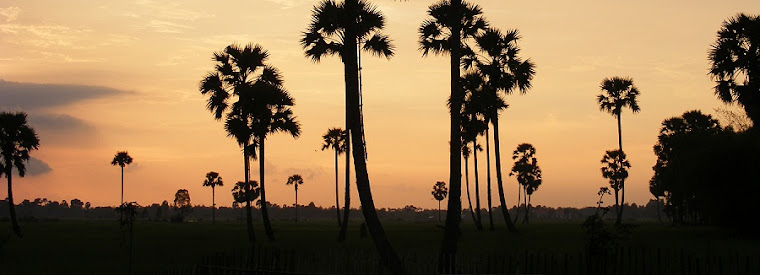
"There are far, far better things ahead than any we leave behind." ~C.S. Lewis

Sunday, April 17, 2016

I am a feminist

I had started writing this post over a month ago, meaning to post it on International Women’s Day. However, I kept re-writing parts and delaying, worrying it sounded too angry or reactive. After being harassed on the way to church today by a man who tried to convince me that I wanted to have sex with him (once you are black you never go back, and have I ever tried dark chocolate??) angry is exactly how I felt. It is time to stop re-wording things and post it as it is. If a little emotion peeps through, so be it. 

What does it mean for me to be a woman and a feminist in Southern Africa? I present to you my own thoughts, stories, and experiences of what it means to me, respectfully acknowledging that other women, and men, might come at this from a very different set of experiences or perspectives.

The term “feminist” has some extreme references that are not necessary reflected in this blog, however, I choose this word because nothing else quite fits. I choose it in order that I might begin exploring what feminism means to me at this time.  

There’s more to the story I told last month, the one about the taxi driver wanting to marry me for 20 cows. First of all, we forgot to pay him for the ride and he forgot to ask, which is kind of hilarious. But that’s not the part I want to tell. It is this; the next day we were with some colleagues of Keke’s and she was telling them the funny story from the day before. Her male friend exclaimed, “Only 20 cows!? Next time you take a taxi bring me along and we’ll get a better deal.” Later that day he started joking that I was his girlfriend, and that didn’t stop even when someone pointed out that his fiancé might not be too pleased.

Here is my dilemma. This type of joking conversation seems very normal here. Even not-so-joking declarations of love and requests for my hand in marriage are every-day occurrences in my life. It gets so that I can’t develop a professional relationship with young men because before the day is out they are asking to marry me.  So, just because it is normal, or just because they are “joking”, does that make it right? I can think of plenty of examples from my own Canadian culture of norms that are oppressive, discriminatory, or demeaning towards women.

Just because it is normal doesn’t mean it is right.

I had a whole speech ready to hand it to this guy, ready to challenge him as a young leader in his country to set an example of respect towards women, challenge him to re-think the implications of such social norms. What does it say about his views towards women when his whole demeanor suggested I should be happy to “pretend” date him because he thought it was a good idea, not because he asked me. As if I couldn’t do better than an arrogant prick like him! I had the opportunity to say all these things, but I choked. I felt too alone, too aware I’d just be brushed off as an uptight girl who can’t take a joke, and what business did I have commenting on Lesotho culture anyway?

What does it mean for me to be a feminist in Southern Africa? This is a question I often ask myself, and there is no easy answer. It is easy to be a feminist in New Brunswick. Other people can write the provoking blog posts and I can nod in agreement and go on with life. But now it is my turn to write.

I am a feminist.

Sometimes being a feminist means refusing to let random teenage guys take my picture when I am at the beach in Mozambique. I ask them if it is respectful to try and take someone’s picture without even greeting them first, in a culture where greeting is very important. They look embarrassed and leave me alone after that.  
Sometimes being a feminist means stiffening my shoulders and focusing my eyes in the distance as drunken men hiss and call after me on the street.

I am a strong woman.

Sometimes being new to a country I would do anything just to fit in. I find myself carrying my male colleague’s bags that he handed to me as we walk out of the store together. At first I feel happy that I belong, happy that he is treating me, a foreigner, like any other woman. Wait a second. What am I doing?? I don’t want to carry his bags for him! I am too embarrassed to give them back. Am I a strong woman?

Sometimes people ask me if I think it is better to be a man or a woman. Sometimes people laugh at my idealism when I make a point about woman’s rights or equal opportunity. But at least if they join in the discussion the first step has been won.

Sometimes the divide in the debate is generational, not gender based. Are teenage girls who wear short skirts somehow to blame when they experience sexual violence? The room is split and it is not men versus women.  There is hope.

When I moved to Machanga in Mozambique last year I had the chance to pick out the motorcycle I wanted. In a place where few women know how to drive, having wheels gave me freedom and independence. I knew exactly what I wanted: a cute little scooter with the tank under the seat and electric starter. Totally impractical for the rural roads I was driving, but very important for me for three reasons. The tank under the seat instead of between the knees meant I could wear a skirt while riding. The electric starter meant no kick-starting, which requires sturdy shoes (not heels) and more weight than I’ve got. The small scooter size meant I could easily push it up a wooden plank and into my house every night for safekeeping. I am perfectly capable of riding a big Honda XL 125CC bike much more suited to rural sandy roads, but I didn’t just want freedom to get around. I wanted freedom to get around while rocking heels and a pencil skirt. People are always well dressed in Mozambique and it is important to look nice and wear smart shoes. Quite seriously the second thing I bought for my new apartment was a clothes iron (the first being a toaster). My scooter let me dress how I want and still have the freedom to get around. The definition of independence shouldn’t mean to be like a man.

I am an independent woman.  

Here, when you meet a new person, instead of asking what you do, people ask if you are married. An elderly man, when he heard I was single at 26 said to me, “Don’t worry, God will provide someone for you.” I asked him if God is not providing for me now when I am single.

I am a strong woman.

I see other women who are strong, courageous, loving, independent, strong-willed, compassionate, caring, genuine, and generous, and I am inspired.

I am a strong woman. Sometimes I feel it, and sometimes I don’t. Sometime I laugh, sometimes I cry. Sometimes I feel intimidated and am angry at myself for it, because I am strong, right? Sometimes I am vulnerable. Sometimes I am victorious.

I am all these things. I am a woman. I live with hope, not bitterness.  I live in this world but I try to live so that tomorrow, even in the smallest of ways, it might be a better one.  


Tuesday, March 29, 2016

A Room with a View

I was recently doing one of those map things you find on facebook where you fill in all of the countries you have visited and it highlights them on the globe. I still have a lot of places to go, but what caught my attention is that I have lived in 5 different countries on 4 continents! 5 might not sound like many, but for a 26 year old who, until she was 21, never imagined leaving the Maritimes, it is a lot. (If you are trying to do the math and it is not adding up, don’t forget I spent a term in Finland during university.)

I often get the rather annoying question “what place do you like more: A or B?” It is annoying because there is no way to give a satisfactory answer. If I make a definite choice, people think I am lying to please them, if I say there are things I like about both, it is a cop-out.
It didn't take me long to find a home
for my bird poster on the walls of my
new place.

I’ve been in Zimbabwe a few weeks now, and soon people will be asking me how it compares. Every place has its ups and downs to be sure, but instead of comparing I’m going to give you a short intro to Zim by sharing some of the things I am thankful for about my new place. The little things that, bit by bit, are starting to make it feel like home.


First of all, I love my apartment. It is one bedroom, but the rooms are HUGE. The 10-foot ceilings and door handles at shoulder height add to the effect. I’m on the 5th floor; a room with a great view. Added bonus, the lift (installed in ’59) actually works. I love random decorative pillars in the bedroom where I hang my hammock. I love the big windows. I love the view.


One section of the wardrobe devoted
to my tailor-made dresses I've amassed over
the years- most from Mozambique. 
My giant closet is awesome. It takes up one whole wall. My colleague Keke lives in the same building on the 3rd floor. We discovered an outdoor second hand clothing market not 3 mins walk from our house. We also discovered this is a dangerous thing.  I suspect my wardrobe will fill up fast. Any of you remember my shoe collection from last year? Sadly I had to leave some behind in Moz, but I’ve added three more since I moved to Bulawayo.


KD made with real butter and milk feels like home. The KD is actually from home, but the butter and uht milk, and pretty much everything else I could want are available in one of many supermarkets walking distance from my place.

The MCC office is also just 10 mins walk from my house. The city is impossible to get lost in. It is a grid and every avenue that runs east-west is numbered sequentially starting from the north to the south end. The streets are wide enough for an ox-cart team to make a 180-degree turn; even though Bulawayo is the second biggest city in the country, it doesn’t feel too crowded or congested.

Playing around with watercolour last Sunday…
a mostly finished painting if Brier Island,  Nova Scotia. 
I’m thankful for quiet alone time to knit, paint, cross-stitch, work out, watch TV, and read in my hammock. Last week I finished a book in 24 hours (the Maze Runner). First time I’ve done that since middle school.


Keke lives two floors below me and we go exploring the city together whenever we are free. We are each other’s mirror at the market and each other’s compass as we try to remember where that neat little Indian grocers was.

I love that there is a washing machine in Keke’s place and I don’t have to wash anything by hand. After three years. Forget sliced bread, washing machines are the best invention ever.


I love that Victoria Falls is less than 6 hours away by bus. Need I say more?


Impressive right? Or would be if you could actually see the falls.  We got soaked with the spray. 
When I posted these pictures on Facebook someone pointed out that it looks a lot better  without the hotels and casinos. Niagara is impressive, don't get me wrong, but this is something else. 


It took me a few weeks to find the right one, but I have found my soul-mate. One-person tea pots are hard to come by apparently. I've heard it gets cold in Bulawayo come May so I've gotten a head start on a cozy for her. It wasn't until I had my first proper pot of tea that I finally started to feel at home.  

Wednesday, March 2, 2016

Impressions of Lesotho

     My job is in full swing now. My co-worker Keke and I are busy recruiting for MCC’s Seed exchange program in Southern Africa and finding placements for the participants with our various agriculture/food-security related partners. In order to do this, we have the great privilege of traveling and visiting these partners in person.
The Tete countryside is beautiful in the rainy season. 

At Thole dam in Tete
      Our first stop after some orientation in Johannesburg was the sand-dam project in Tete, Mozambique. It was great connect again with old friends and colleagues. After showing Keke around my old stomping grounds, I had the great pleasure to accompany her to her home country of Lesotho. The official purpose of our visit was to see the MCC partner, but more meaningful to me was getting to see Keke in her home country and get to know her family and friends. Even before we got to her hometown, it was clear Keke was in her element. Not 30 minutes after stepping foot in the country she was bargaining my bride price with our taxi driver. She set it at 20 cows, which the driver seemed to think was a bit steep. Since I don’t speak Sesotho, I was blissfully unaware of the negotiations going on beside me. 
      After arriving in Lesotho Friday afternoon we went to Paballong, an HIV/AIDS care centre, which strives to care for the holistic well-being of people living with HIV/AIDS. The caretaker gave us a lovely tour of the place.  In addition to the clinic, which provides free care for any secondary sicknesses, they have a child-care centre, youth program, and a thriving farm which provides income for the project, food for the visiting patients, and serves as a demonstration farm for those who want to learn vegetable gardening in order to provide for their families. We ate fresh peaches and grapes from the tree and vine until we could eat no more.
View of the farm and peach orchard at Paballong. They are currently setting up a drip irrigation system to help conserve water during times of shortage.
      On Saturday we took the bus to Keke’s parents’ house. We spent the day relaxing. Her brother tried over the course of a couple of hours to explain the rules of cricket as we watched on TV. I sort of got the rules, but still don’t get why anyone would invent a game that takes days to play.
      In the late afternoon we ate more peaches.
Sporting Keke's father's Basotho hat, holding a bucket of peaches. They peaches are small this year due to drought, the size of an apricot, but delicious nevertheless. 
      Sunday morning we went to visit some colleagues of Keke’s that she used to work with. It is an organization that promotes the use of solar “sun stoves.” In a place where wood is scarce and fuel expensive, solar cooking is an excelling idea. They target grandparents who often care for their grandchildren, the parents having left the country to find work. It was the final day of training for this particular community in Mafeteng. We got there a bit late for the training, but just in time to see raisin bread come out of 50 ovens.
Fresh bread!
      Sunday afternoon we made our way to Growing Nations Trust- the poster child of Conservation Agriculture and youth involvement in the country. I finally got to see the place I’ve heard so much about! Keke is a product of their resident training program, and went on to do IVEP where she spent a year in Canada with MCC, and now she is the co-facilitator of Seed. We visited the field on Monday morning, and I got a tour of their fields. Though their hard work and vision did not fail to impress, practical application is suffering this year due to a regional drought. El Niño is having devastating effects on the ground this year. These are subsistence farmers who often have no other source of income besides their farms, and yet they have not planted anything during the rainy season because it has not rained. Even the weeds aren’t growing. We saw the same in Mozambique. People are now hoping for a successful winter crop, which they will harvest in July, assuming they get some late rains that will carry them through. Conserving water and soil humidity is now more important than ever.  This farmer has been diligently applied all of the CA principles on his little plot: he didn’t plough; he deeply mulched the field; intercropped maize and leguminous plants; and applied chicken manure as fertilizer. Neighbours thought this farmer was crazy to work so much to cultivate such a small plot, but the promise of something is better than the certainty of nothing.

Farmer Kelebone showing me his maize/bean plot. Notice the great mulch and excellent example of intercropping. We are standing on the edge so it is hard to see, but the beans are covering the ground between rows of maize. 

An experiment at Growing Nations farm. This field was divided in two:
the half pictured below they let animals to graze- there is no soil cover and some
nasty weeds are taking hold. On the half above, there was no grazing. There is lots
of mulching, and fewer weeds. Wheat was planted in lines using a ripper
on the same day for both fields. but it hasn't rained since. Can you see
which one has germinated? 

In other news, I have moved to Zimbabwe, have received my work permit, and finally have my own apartment in Bulawayo!